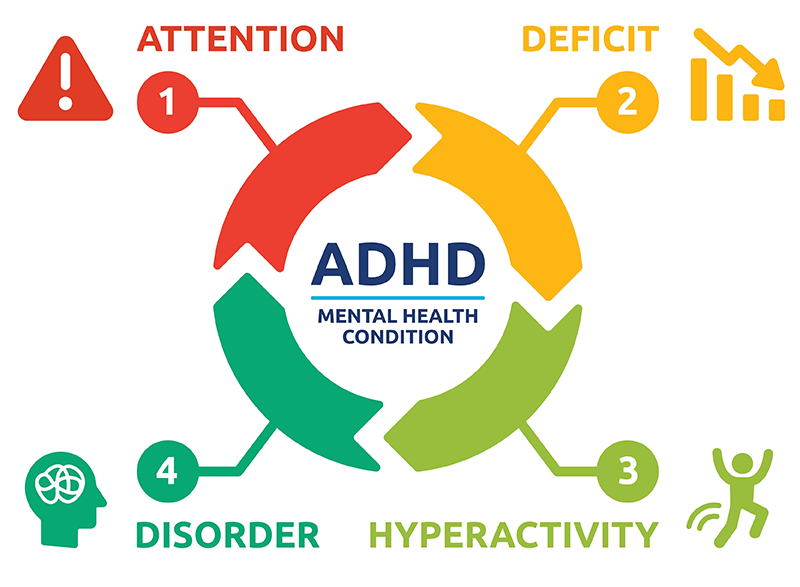
Background Information on ADHD Attention deficit hyperactivity disorder is a condition, which affects those parts of the brain which control attention, impulses and concentration (a neurobiological condition). It is thought to affect 3 to 7% of school age children.1 2 3 There is some evidence that boys are three times more likely to suffer from ADHD than girls.4 Until recent years it was thought that children outgrew ADHD in adolescence. However, it is now known that in approximately one third to one half of children with ADHD, the symptoms continue into adulthood.5
The best description for ADHD is that a child who suffers from this condition shows disruptive behaviours, which cannot be explained by any other psychiatric condition and are not in keeping with those of the same-aged people with similar intelligence and development. These behaviours are usually first noticed in early childhood, and they are more extreme than simple “misbehaving”. Children with ADHD have difficulty focussing their attention to complete a specific task. Additionally they can be hyperactive and impulsive and can suffer from mood swings and “social clumsiness”.
Although people with ADHD can be very successful in life, without identification and proper treatment, ADHD may have serious consequences, which can include4: –